
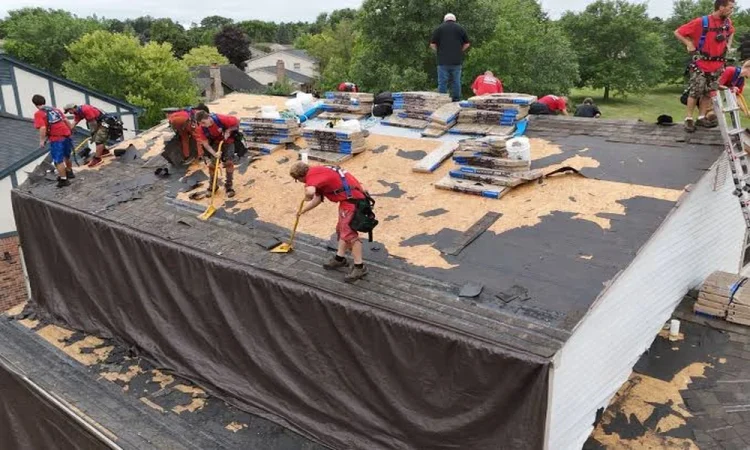

The building inspector usually shows up at the very end, after the dumpster is gone. They walk the driveway, look up at the eaves, and sometimes climb a ladder to lift the edge of a shingle. That visit only takes a few minutes, but it checks months of decisions. It shows whether the right paperwork was filed, whether the right layers went down under the shingles, and whether the roof was built for weather coming in off Cape Cod Bay.
Homeowners searching for a roofing company in Plymouth often focus on shingle color and price. It pays to know what the town and the state expect too. One local option is roofing company in Plymouth M&M Construction, a small GAF-certified crew based off Montgomery Drive that can offer the manufacturer’s System Plus warranty on its installs. Any contractor you hire should be able to explain each step below without hesitating.
Before the First Shingle Comes Off
In Plymouth, reroofing a house needs a building permit, and the process is quicker than most people expect. The town’s Inspectional Services Department has a short application covering roofing, siding, windows, doors and insulation. Residential roofing carries a $75 fee, a combination of two exterior jobs costs $140, and three costs $200. A straightforward tear-off with no structural changes usually goes through as an express permit, and the town still requires a final inspection before it’s closed.
The application includes a workers’ compensation affidavit. That page matters more than it looks. If a roofer without coverage falls off your house, the homeowner can end up facing the claim. A contractor who files the permit in their own name and lists their insurance is taking on that responsibility. A contractor who asks you to pull the permit yourself is pushing it back onto you, so treat that as a warning sign.
Massachusetts also checks the people doing the work, not only the permit. Anyone doing residential work on an owner-occupied home with one to four units must be registered as a Home Improvement Contractor. Roofing replacement also calls for a Construction Supervisor License, which can be a restricted license specific to roof coverings. Both numbers belong on the permit application and on your contract. The town keeps its current building permit applications and forms online, so you can see exactly what your roofer will be filling out.
The Contract Massachusetts Expects
State law gives homeowners specific protections that many people never hear about. Any home improvement job over $1,000 needs a written contract. It should list start and completion dates, a description of the work and materials, the total price, the payment schedule, and the contractor’s registration number. A deposit generally can’t exceed one third of the total price unless materials are special ordered.
Working with a registered contractor also gives you access to the state’s Guaranty Fund. It can reimburse homeowners who win a judgment against a registered contractor and can’t collect. Hiring an unregistered crew takes that protection away entirely, which is one more reason the registration number on the contract matters.
What Sits Under the Shingles
Most of what the inspector cares about is out of sight once the job is done. Massachusetts follows a building code based on the International Residential Code, and in a coastal New England town several layers are standard.
- An ice barrier membrane along the eaves that runs from the edge to at least 24 inches inside the exterior wall line. This is the line of defense against ice dams on the kind of shallow, low-attic Capes found all over town.
- Synthetic or felt underlayment over the rest of the deck, lapped correctly so water runs over each seam rather than into it.
- Metal drip edge at the eaves and rakes, so wind-driven rain can’t wick back under the first course.
- Flashing at chimneys, walls and skylights that is replaced, not reused. Old step flashing bent around a new shingle is a common shortcut and a common leak.
- Balanced attic ventilation with intake at the soffits and exhaust at or near the ridge. A hot, damp attic shortens a shingle’s life no matter the brand.
None of these items costs much compared with the full job. Skipping any one of them can turn into a ceiling stain by the second winter.
Two Layers and Not One More
Older Plymouth homes sometimes already carry two roofs, with a newer layer laid right over the original. The code allows at most two layers of asphalt shingles. If two are already there, the next job has to be a full tear-off down to the deck. Even with only one existing layer, a tear-off is usually the better choice. It lets the crew see the sheathing, swap out rotted boards near the eaves, and install the ice barrier directly on the wood, where it actually seals around nails.
Expect a fair estimate to include a per-sheet price for replacement decking. Nobody can tell how much is rotten until the old roof is off, and a contractor who promises none at all is guessing.
Wind Off the Bay
Plymouth’s coastline gets nor’easters that hit with sustained wind and sideways rain, and homes near the water feel it most. Shingles rated for high wind, nailed in the manufacturer’s high-wind pattern, hold up far better than the minimum. That usually means six nails per shingle instead of four, set just below the sealant strip rather than wherever the nail gun happens to land. Starter strips with their own adhesive at the eaves and rakes keep the first row from peeling back, and that edge is where wind damage almost always starts.
Ridge caps and hip shingles deserve the same attention. They take the most wind, and cheap three-tab pieces cut into caps tend to be the first thing found in the yard after a storm.
The Day the Inspector Climbs the Ladder
By final inspection, a roof built carefully has nothing to hide. The permit card is posted, the registration numbers match, and the drip edge is clean and straight along the eaves. If the inspector lifts the lowest course, they’ll find ice barrier rather than bare plywood. A roof built in a rush tends to fail on exactly these small things, and fixing them after the shingles are on costs much more than doing them right the first time.
For homeowners, the inspection is less about passing a test and more about confirming what they paid for. Ask your contractor to walk you through it. A good crew will be glad to show you what’s underneath, because that’s the part of a roof that decides how many winters it lasts.