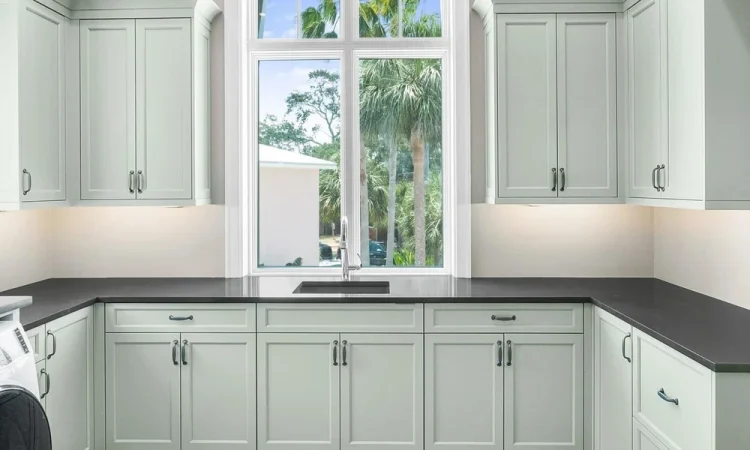
Inset cabinets are the ones where the door sits inside the cabinet frame instead of on top of it. When closed, the door sits flush with the frame. It’s an older way of building cabinets, and it shows up most in classic and transitional kitchens, though it can look just as good in a modern room with slab doors and slim pulls.
Most people who like the style like it for the same reason. It looks tailored, almost like a piece of furniture, with no visible door edge hanging over the box.
That look takes more work to get right. The gap around each door is small, often around an eighth of an inch, and it has to stay even on all four sides. If a frame is slightly out of square or a door is a little off, the gap shows it right away. For that reason, a lot of people treat inset work as a fair test of a cabinetmaker’s skill.
There are a couple of trade-offs worth knowing before choosing it. Since the door sits inside the frame, the cabinet gives up a bit of interior space compared with a full-overlay design, and drawer boxes end up a little smaller. In humid places like Tampa, wood also moves with the seasons, so careful building and a good finish matter if the doors are going to keep closing smoothly.
Hardware changes the feel quite a bit. Exposed hinges and latches lean traditional, while hidden hinges and simple pulls look more current. Paint is the most common finish for inset cabinets, but stained oak or walnut can be very handsome.
For homeowners who plan to stay put for a long time, the style tends to be worth the extra effort.
In Tampa Bay, The French Refinery designs and builds custom cabinetry, including inset styles made for Florida homes.