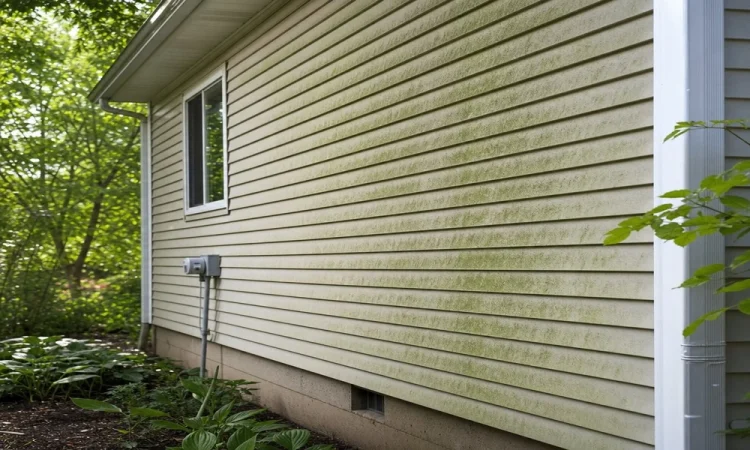
That green streak on your Okemos home’s siding isn’t just dirt or moss, it’s likely algae. While green algae typically starts small in shady spots around your home, it eventually covers more and more siding. It’s the reason why, as time goes on, siding often appears duller than the homeowner intended.
Check this link https://www.livescience.com/54979-what-are-algae.html to know more about algae.
However, while algae is the cause, the reason it grows isn’t always obvious. Often, it’s the conditions around the home that make siding grow green.
Why Algae Grows on Okemos Homes
As you can likely tell from its name, algae grows best in wet and shaded areas. Okemos’s weather, with its wet springs and humid summers, combined with the natural landscape, often presents an ideal environment for green algae. Add in a house that doesn’t get much direct sunlight for most of the day, and you end up with siding that doesn’t dry very often.
But for algae to form, it also needs food, and that food takes the form of organic material. Pollen, dust, leaf pieces, and so on can all land on a home’s siding and build up as an organic surface over time. Once you add that dampness, you’re likely to get green growth.
This is why you’ll see green streaks and spots of algae appear in some areas of your siding and not others. It’s because the spots that get stained with green first tend to get the most shade and moisture.
The Most Common Green Siding Spots
Algae forms on siding in patterns. It doesn’t just start appearing in one part of siding and then start popping up elsewhere. If one area of siding looks greener than the rest, the location of that siding will tell you why.
Common trouble spots on Okemos homes include siding:
- On the north side of the home
- That is in heavy shade
- Behind bushes or trees
- Just below gutters that have a lot of water on them
- Below or near mulch or other soil
- In areas with poor airflow
All of these spots have moisture, and the wetter siding is, the easier it is for green algae to grow and spread.
Is It Algae, Mold, or Just Dirt?
Often, green siding is the result of algae and not mold. The main difference is that algae lives on the surface of siding. It feeds off of moisture and the organic matter mentioned previously. Dirt, meanwhile, is just, well, dirt and can look grayish on the outside of your house. The green hue on your siding is almost certainly a tell-tale sign of algae.
Even when the algae that’s forming is mostly just cosmetic, you still want to make the attempt to remove it. Algae can trap debris and dirt against your siding, potentially making staining even harder to remove. It can also make your home’s exterior appear less appealing and, in turn, make your curb appeal lower. If you have lighter-colored siding, green will stand out immediately, but even on darker siding, you can get away with it for a while before the buildup really becomes noticeable.
If the area turns green again soon after it has been cleaned, you may have a moisture issue that needs to be taken care of. Maybe your gutters overflow too much, your drainage could be better, or the landscaping around your home makes your siding damp.
How Landscaping Makes the Problem Worse
If you look at the common trouble spots listed above, you’ll see they all involve outdoor elements such as landscaping. Trees can provide a canopy that shades your siding. That canopy also drops pollen onto your siding. Bushes can also provide shade, while their leaves and pollen also contribute to the problem.
You don’t necessarily need to uproot your landscaping or take it all down. All you need is to trim your trees and bushes back so that the siding can better dry out after it rains.
Why Blasting It with Pressure Can Backfire
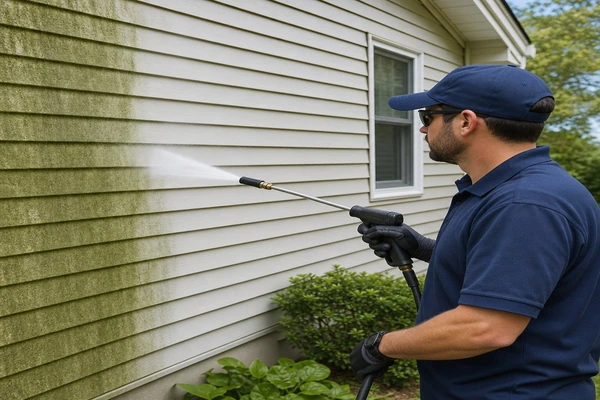
When it comes to green streaks, algae, and other debris on your siding, it may be tempting to blast it off with a high-pressure wash. While pressure cleaning can be helpful, you do have to be careful of what you’re washing. You may damage or crack siding, leave marks in painted wood, or even push water into the joints and underneath the siding, all of which can cause you to have problems later on.
It’s also worth noting that all siding needs special care for pressure washing. Different siding materials, including vinyl, painted wood, and composite or fiber cement siding can handle being pressure washed differently.
Keeping Green Growth from Coming Back
Prevention is always better, so what are the steps you can take to keep green algae from growing on siding? While they’re not 100% foolproof, there are some steps you can take that make green algae a lot less likely to appear in the first place.
- Don’t let water spill over from your gutters.
- Don’t let trees and bushes block the light.
- Rinse away pollen.
- Don’t place mulch near the siding.
- Don’t ignore drainage issues on your property.
What Your Green Siding Is Really Telling You
With regular pressure cleaning, better outdoor drainage, and more light on your siding, you’ll be in a much better position to keep green algae from forming in the future.